Main Beskidy Trail – longest mountain trail in Poland
Main Beskidy Trail – thru-hike of the longest trail in the Polish mountains.
Whenever you head into the mountains, regardless of the length or difficulty of your route, a properly equipped first aid kit should be an essential part of your gear. In mountain environments, where access to medical assistance is often limited, the ability to respond quickly can make all the difference. In describing my expeditions, I have repeatedly emphasised the principle that “less is more”. A lighter pack means easier walking and less fatigue. But can minimalism also apply to safety? Is it possible to minimise the amount of equipment that could potentially save our lives?
During my first crossing of Carpathian Mountains in 2004, my first aid kit weighed over 700 g and took up approximately one litre of space. I packed it with a huge number of dressings, three different painkillers, fever-reducing medication, an antibiotic and much more. For the Main Beskid Trail (Główny Szlak Beskidzki), I took a small kit weighing around 80 g. It contained a very basic selection of items: disposable gloves, a CPR face shield, adhesive plasters for cuts, a small roll of medical tape, a Compeed blister dressing, gauze, an elastic bandage and a small tick-removal tool. I also carried one painkiller and one medication for food poisoning. Everything was packed into a resealable plastic bag that fitted in the palm of my hand.
Why such a modest selection?
Looking back at my own experiences and those of people I know, I have noticed that the most common problems in the mountains are musculoskeletal injuries, followed by food poisoning. The former include bruises, sprains, dislocations and, in more serious cases, fractures. Some of these can be treated immediately, right there on the trail. That is why it makes sense to carry only equipment that you can actually use at the scene of an accident. I do not pack complicated equipment or medication for every conceivable emergency. I limit myself to items that may genuinely be needed to protect someone’s health or save a life.
Such a short list would not be suitable for travelling in tropical countries or climbing in the high mountains. And this leads to a simple conclusion: there is no single, universal formula for putting together a first aid kit. Its contents must change depending on where and when you go hiking.
Once I understood this, my approach to packing changed. In the past, I had one universal kit ready to go, which I simply threw into my backpack whenever I set off on a trip. Now I select the contents of my first aid kit specifically for each expedition, putting it together slightly differently every time, depending on the location and technical difficulty. It takes me about 20 minutes of preparation each time, but gives me greater confidence that I will be properly equipped.

There is, however, a basic kit that I take with me into mountains such as those in Poland. It is intended to provide assistance in situations requiring immediate action on the spot:
Other types of illness will usually require you to leave the trail.
The kit intended to deal with these problems is small. It contains the following items:
Although this kit may seem quite extensive, everything fits into a small Deuter First Aid Kit Active pouch. It weighs 290 g.
Separately, alongside the first aid kit, I carry a lightweight emergency bivvy bag, which is more practical and durable than a standard NRC emergency blanket.
I have marked three items with an asterisk (*). These are not usually included in standard first aid kits and require more extensive knowledge, but they can be useful in emergency medical situations. I realise that if you are not a trained first aider or medical professional, using a haemostatic dressing or a nasopharyngeal airway may be unfamiliar territory. But don’t worry. Your first aid kit should contain items you feel comfortable using. As your knowledge and skills develop, you can gradually expand your kit.

“Developing your knowledge” – these words are particularly important. You can carry a first aid kit. But do you know how to use it?
Can you assess an injured person’s condition? Can you perform CPR? Can you control severe bleeding? Can you dress a wound or immobilise a limb? If you have any doubts, take a first aid course and refresh your skills regularly, for example by attending a refresher course every two years.
Training conducted in mountain environments by members of GOPR and TOPR (Polish Mountain Rescue Services) can be particularly valuable. I gained some of my knowledge during training sessions with the rescue teams involved in the Bezpieczny Kazbek (Safe Kazbek) project, and I learned a great deal from them. Familiarise yourself with literature on travel medicine and mountain medicine. Buy and read “First Aid in the Mountains” – it is an extremely valuable resource. Familiarise yourself with the UIAA medical guidelines and the guidelines of the Polish Resuscitation Council. If you take your passion for the mountains seriously, consider obtaining a Qualified First Aid (KPP) certificate. This is the highest level of first aid qualification available in Poland to someone without formal medical education. I consider my own first aid responder course to have been a major improvement in my practical skills, and I highly recommend it. If you are planning to venture into the high mountains, you should also develop your knowledge of high-altitude medicine.
Under Polish law, administering medication is not considered part of first aid. Exceptions include life-saving medication such as adrenaline. Of course, an injured or ill person can take their own medication, but as someone providing first aid, you should generally not administer drugs. The risk of making an incorrect diagnosis is simply too high. Fortunately, in the Polish mountains, medical assistance from doctors or mountain rescuers will usually arrive within a few hours, often much sooner.
The situation becomes more complicated in remote areas or high mountains. There, the distance from civilisation and the lack of organised rescue services may mean that you need to carry a selection of medication. Before an expedition, it is worth discussing your medication list with a doctor. Naturally, you should also include any medication you take regularly.
Important!This article is not a first aid manual. Nor does it explain how or when to administer any particular medication. I am simply presenting a list of medicines that I PERSONALLY carry into the mountains and that have worked well in MY experience so far. Other people’s experiences may differ from mine. Before your expedition, you must discuss such a list with a doctor and know how to provide assistance to an injured or ill person. No list of medicines will help if you do not also bring solid KNOWLEDGE with you into the mountains.
This is the selection I take into the Polish mountains and on trekking trips in the Carpathians or Alps. I usually keep these medicines in a separate pouch.
This is an extended kit for trips lasting several weeks outside Europe:
High-altitude mountains present an entirely different challenge. I will cover this subject in a separate article soon.
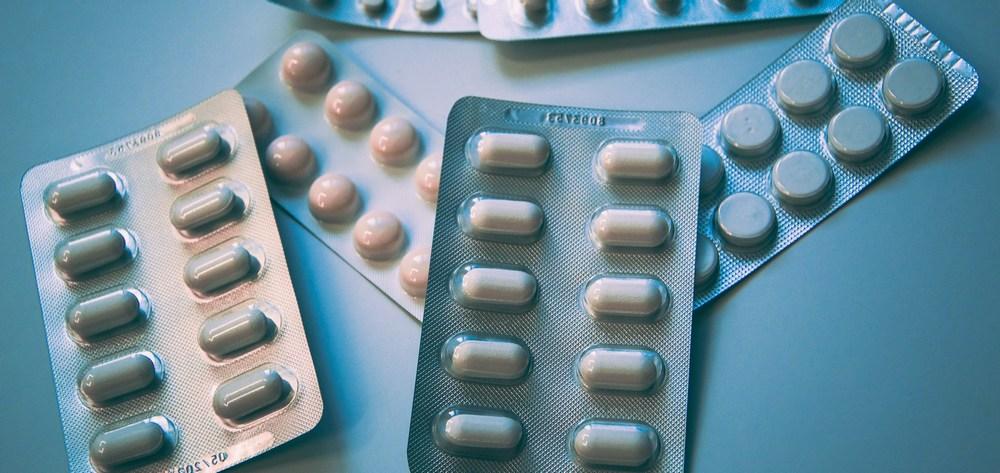
I pack my first aid kits in conventional first aid pouches. They should open all the way around so that their contents are easily accessible. I also follow one simple rule: a first aid kit must be easy to find. That is why I use traditional red pouches. However, these are less suitable when you need to carry a large amount of medication. Tablets can crumble and fall out of their original blister packaging. A good solution is to pack medicines separately in small, rigid containers. I also carry the original medication leaflets, which include dosage instructions.
You will find many different pre-equipped first aid kits in outdoor shops. If you buy one, check whether it contains everything you need. I replace a large proportion of the contents of my own kits and add new items so that I can rely on equipment I know and have tested.
I organise my equipment into three different first aid kits, depending on their intended use:
You can minimise the risk of accidents in the mountains through proper preparation. Good hiking boots will help prevent blisters. A lighter backpack means less strain on your joints. Trekking poles help you maintain your balance and reduce the risk of falling on the trail. Paying attention to the source of your drinking water can help you avoid potentially dangerous infections. Knowing the different types of clouds can help you anticipate an approaching storm. Checking the weather forecast can help you avoid exposure to extreme cold. Checking the avalanche bulletin can help you avoid being caught in a snow avalanche. Prevention is therefore the first line of defence, and it works in 95% of cases.
However, accidents can still happen when you least expect them. You might twist your ankle on an easy trail, trip over a small pine cone or suffer severe stomach problems after drinking from a seemingly crystal-clear spring. What then? Polish sailor and captain Andrzej Urbańczyk once wrote that a good navigator is not someone who never gets lost, but someone who has enough strength, food and water to allow for a temporary mistake and find the right way again. The same applies in the mountains when things go wrong. If your body lets you down and illness strikes, stop and give yourself time to recover. If an accident occurs, call for help. With a broken leg, you will not be able to walk anyway, whether you are in the Little Beskids or the Himalayas. In the European mountains, carry a mobile phone. In places far from civilisation, take a satellite phone or a satellite communicator such as the Garmin inReach. And while waiting for rescue, make good use of the equipment you have with you and focus on getting through the difficult situation.
Main Beskidy Trail – thru-hike of the longest trail in the Polish mountains.

First aid kit for mountains like the Himalayas, Pamir, or Andes. What does it contain?

How can you plan your route up the mountain before the expedition?